
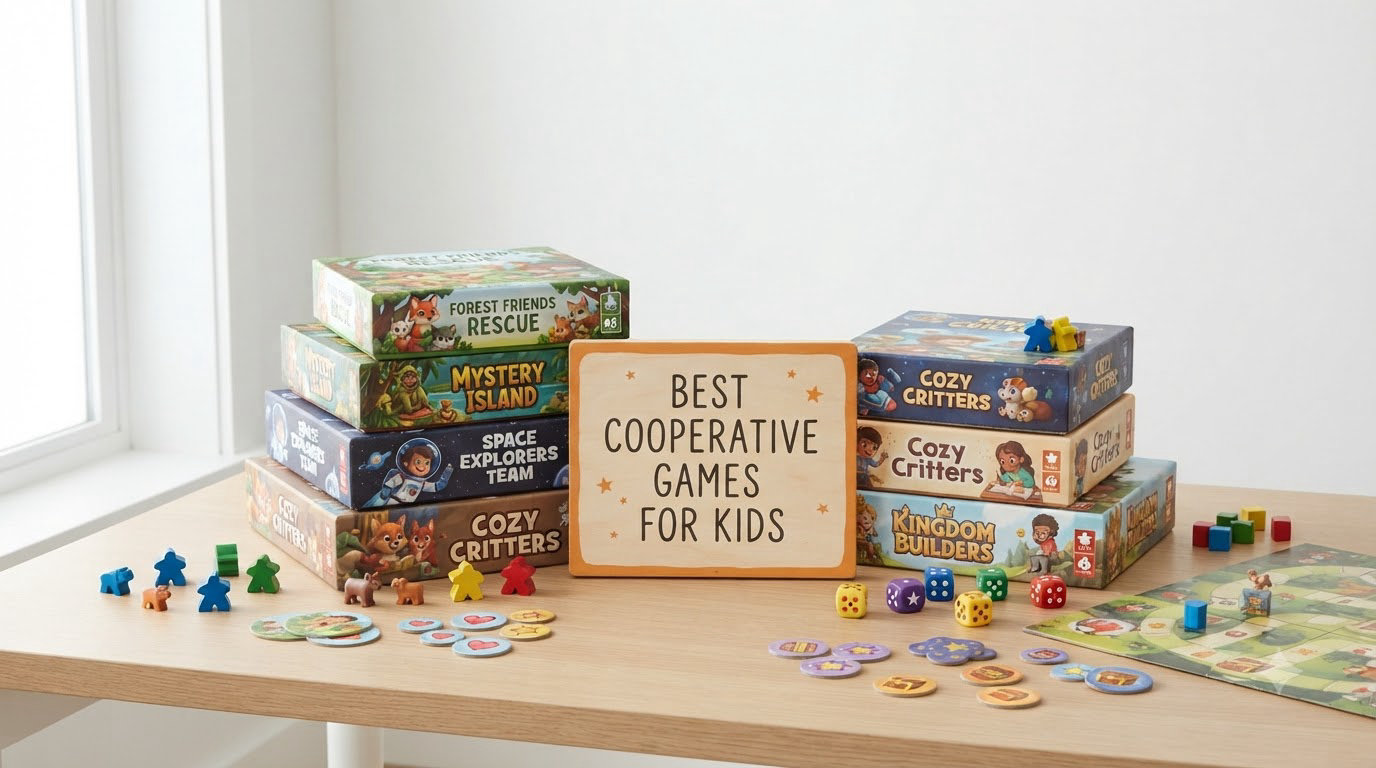
When my kids started refusing to play anything because someone always “won,” I knew we needed a different kind of game night. Cooperative board games for kids changed everything in our house. Instead of teaching them to be sore losers, these games teach them to be teammates, problem-solvers, and cheerleaders for each other.
In a cooperative game, every player works toward the same goal. You win together or you lose together. That single rule reshapes how kids approach play. We have spent the last year testing cooperative games with our own children and a handful of neighborhood families, and the results have been eye-opening. Siblings who used to argue now strategize. Shy kids speak up. And parents get to be part of the team instead of just refereeing.
This guide covers the best cooperative board games for kids available right now. Every game below was tested in real family game nights, with real mixed-age groups, and we have included options for toddlers, early elementary, tweens, and the whole extended family. Whether you are planning a strategy-themed evening or looking for something your three-year-old can play, you will find your next family favorite here.
Table of Contents
- Top 3 Picks for Best Cooperative Board Games for Kids
- Best Cooperative Board Games for Kids in 2026
- 1. OUTFOXED Cooperative Mystery Game – Editor’s Pick for Cooperative Play
- 2. Hoot Owl Hoot – Best Value Matching Game for Young Kids
- 3. Race to the Treasure – Best Budget Path-Building Strategy Game
- 4. HABA My Very First Games First Orchard – Best for Toddlers Ages 2 and Up
- 5. Mermaid Island – Best Magical Theme for Mixed Ages
- 6. Dinosaur Escape – Best Memory-Based Cooperative Game
- 7. Count Your Chickens – Best Counting Game for Early Learners
- 8. My First Castle Panic – Best Castle Defense for Young Strategy Lovers
- 9. Feed the Woozle – Best Active Play for Energetic Kids
- 10. Wildcraft! – Best Educational Cooperative Game About Nature
- 11. Baby Dinosaur Rescue – Best Simple Dinosaur Game for Early Elementary
- 12. Noah’s Animal Rescue – Best Faith-Based Cooperative Game
- How to Choose the Best Cooperative Board Game for Your Family
- Tips for Handling the Alpha Gamer Problem
- Frequently Asked Questions
- Final Verdict: Our Top Cooperative Board Game for Kids
Top 3 Picks for Best Cooperative Board Games for Kids

Best Cooperative Board Games for Kids in 2026
| Product | Specifications | Action |
|---|---|---|
| OUTFOXED Cooperative Mystery Game |
|
Check Latest Price |
 Hoot Owl Hoot Cooperative Matching Hoot Owl Hoot Cooperative Matching |
|
Check Latest Price |
| Race to the Treasure |
|
Check Latest Price |
 HABA My Very First Games First Orchard HABA My Very First Games First Orchard |
|
Check Latest Price |
 Mermaid Island Cooperative Mermaid Island Cooperative |
|
Check Latest Price |
 Dinosaur Escape Memory Game Dinosaur Escape Memory Game |
|
Check Latest Price |
 Count Your Chickens Count Your Chickens |
|
Check Latest Price |
 My First Castle Panic My First Castle Panic |
|
Check Latest Price |
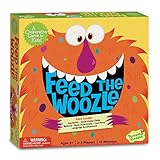 Feed the Woozle Feed the Woozle |
|
Check Latest Price |
 Wildcraft! Herb Learning Wildcraft! Herb Learning |
|
Check Latest Price |
 Baby Dinosaur Rescue Baby Dinosaur Rescue |
|
Check Latest Price |
 Noah’s Animal Rescue Noah’s Animal Rescue |
|
Check Latest Price |
1. OUTFOXED Cooperative Mystery Game – Editor’s Pick for Cooperative Play
OUTFOXED, A CLASSIC WHO DUNNIT GAME FOR PRESCHOOLERS, 4 players
Ages 5+
4 players
20 minute play
Pros
- Cooperative deduction builds critical thinking
- No reading required
- Quick 20 minute rounds
- Beautiful mystery theme
Cons
- Limited to 4 players
- Best for younger ages
OUTFOXED has earned the top spot on our list because it captures the magic of cooperative play better than almost any other game in this category. The premise is simple: a sneaky fox has stolen a pot pie, and players must work together to identify the culprit before it escapes. The game uses a clunky retro “evidence viewer” decoder that kids absolutely love, and the deduction mechanic teaches real logical thinking without feeling like school.
Our family played OUTFOXED with a group of four kids ranging from age five to nine, and every single one contributed meaningfully. The youngest child rolled dice, the older ones cross-referenced clues, and everyone celebrated together when we caught the fox. It is a 20-minute experience that never feels rushed, and the cooperative structure means no one is ever knocked out early.
What makes OUTFOXED stand out is how the rules scale naturally with the players. Younger kids can focus on the dice and basic color matching, while older kids can take the lead on deduction. The components are sturdy and the artwork has a charming vintage feel that parents appreciate as much as kids do. The game consistently earns its 4.8-star rating across 7475 reviews, and after dozens of plays in our home, we understand why.
Compared to other cooperative games, OUTFOXED stands apart because it gives kids genuine agency. They are not just following a script. They are gathering information, eliminating suspects, and building a case together. That sense of shared detective work is what makes this our top recommendation for families starting their cooperative game journey.
Who OUTFOXED works best for
Families with kids ages 5 to 9 will get the most out of OUTFOXED, especially those who love mystery stories and puzzles. It is an excellent choice for two-player variations with a parent and child, although the four-player configuration is where the game truly shines. If your family enjoys deduction games but wants something gentle and screen-free, OUTFOXED is the perfect entry point.
What to watch out for with OUTFOXED
OUTFOXED is limited to four players, so larger families or party groups will need a different option. The theme might feel slightly young for kids over 10, and the deduction aspect can become predictable after many plays. Reviewers report that replayability drops once kids memorize the suspect lineup, but for most families, the 20-minute play time means they can run through multiple rounds in one sitting without losing interest.
2. Hoot Owl Hoot – Best Value Matching Game for Young Kids
Peaceable Kingdom Hoot Owl Hoot – Cooperative Matching Game For Kids
Ages 4+
2-4 players
15 minute play
Pros
- Simple rules for young kids
- Builds strategic thinking
- Beautiful artwork
- Grows with player skill
Cons
- Game can end quickly
- Limited replayability for older kids
Hoot Owl Hoot has been a staple in our family’s game collection for years, and it consistently wins over even the most reluctant players. The goal is straightforward: help the owls fly back to their nest before the sun rises. Players take turns playing owl cards, and the team wins or loses together based on whether they can get all the owls home in time.
The genius of Hoot Owl Hoot is that it teaches real strategic concepts without requiring reading or complex math. Kids learn to plan ahead, manage shared resources, and make collective decisions. The color matching is simple enough for a four-year-old, but the strategy runs deep enough to keep an eight-year-old engaged.
When we brought Hoot Owl Hoot to a friend’s house, the two kids (ages 5 and 7) immediately started strategizing together without any adult prompting. They discussed which colors to prioritize, helped each other remember the rules, and high-fived when they won. That kind of organic cooperation is exactly what we look for in cooperative games.
The Peaceable Kingdom design team clearly thought about both the educational value and the fun factor. The owl pieces are chunky and well-made, the artwork is gentle and beautiful, and the 15-minute play time makes it easy to fit into any evening. With 4028 reviews averaging 4.8 stars, this game is a proven crowd-pleaser for early elementary families.
Who Hoot Owl Hoot works best for
Families with kids ages 4 to 7 will get the most value from Hoot Owl Hoot, especially those looking for a gentle introduction to board games. It is also one of the best cooperative board games for two players since it scales down beautifully for a parent-child pair. If your child struggles with competitive games or gets upset when losing, this is a perfect way to ease them into structured play.
What to watch out for with Hoot Owl Hoot
Older kids (ages 9 and up) may find Hoot Owl Hoot too simple after a few plays. The game can also end quite quickly, leaving some kids wanting more. Reviewers note that the rules can be confusing at first read-through, so plan to spend 5-10 minutes explaining them before the first game. Despite these minor limitations, the cooperative spirit and the gentle learning curve make this a top pick for younger families.
3. Race to the Treasure – Best Budget Path-Building Strategy Game
Peaceable Kingdom Race to the Treasure! Cooperative Path Building Game for 2 to 4 Kids Ages 5+
Ages 5+
2-4 players
20 minute play
Pros
- No reading required
- Multiple difficulty levels
- Award-winning design
- Quick to learn
Cons
- Limited to 4 players
- Can feel repetitive
Race to the Treasure consistently shows up in conversations about the best cooperative board games for kids, and after playing it dozens of times with our family, we understand why. The premise is engaging: players work together to build a path to the treasure before the Ogre reaches it. Every turn, kids draw keys and decide how to use them to create a route while the Ogre creeps closer.
The educational value here is significant. Kids practice strategic thinking, decision-making under pressure, and resource management. They have to balance using keys for short-term progress against saving them for the long path. Even better, the difficulty level is adjustable, so the game grows with your child.
Our family tested Race to the Treasure across multiple age groups. With kids ages 5 and 7, the game was challenging but achievable. With kids ages 5 and 10, the older child naturally took on a teaching role, which made the experience even more rewarding. The path-building mechanic is intuitive, and kids grasp it within one or two turns.
What we appreciate most about Race to the Treasure is its inclusivity. There is no reading required, so even pre-readers can play independently. The artwork is bright and the components are durable enough to survive enthusiastic play. With 3173 reviews averaging 4.8 stars and multiple Oppenheim Toy Portfolio awards, this game is a strong choice for families seeking quality on a budget.
Who Race to the Treasure works best for
Families with kids ages 5 to 8 will get the most out of Race to the Treasure, especially those with mixed-age siblings or playgroups. It is also a great fit for classroom use since the rules are simple enough for early elementary students to learn quickly. If you are looking for a cooperative game that combines strategy with a touch of urgency, this is a solid pick.
What to watch out for with Race to the Treasure
Race to the Treasure is limited to four players, which can be a challenge for larger families. Some reviewers report that the game can feel repetitive after extended play, and the Ogre mechanic can frustrate younger kids when it advances unexpectedly. Despite these concerns, the cooperative structure keeps the experience positive, and the adjustable difficulty means you can always find the right level for your group.
4. HABA My Very First Games First Orchard – Best for Toddlers Ages 2 and Up
Pros
- Sustainable wooden pieces
- Perfect for tiny hands
- Over 30 years proven
- Teaches colors and counting
Cons
- Limited replayability for older kids
- Smaller player count
HABA First Orchard is the original cooperative game for the youngest players, and it has earned its 4.9-star rating across 2972 reviews for good reason. This German-engineered game has been entertaining families for over 30 years, and it remains one of the best cooperative board games for kids ages 2 and up.
The premise is wonderfully simple: players work together to harvest fruit from the orchard before the raven reaches the trees. The chunky wooden fruit pieces are perfectly sized for small hands, the color die is easy to roll, and the rules can be learned in under two minutes. Even two-year-olds can participate meaningfully.
When we introduced First Orchard to our toddler playgroup, the reaction was immediate delight. The wooden pieces are a tactile joy, and the simple matching mechanic gives even the youngest players a clear role. Parents appreciated that the game taught turn-taking, color recognition, and counting without feeling educational.
The quality of HABA’s wooden components is exceptional. They are made from PEFC certified sustainable wood, and they are designed to last through generations of play. The artwork is gentle and inviting, and the game has a calming quality that makes it perfect for winding down before bed.
Who First Orchard works best for
Families with toddlers and preschoolers will get the most out of First Orchard, especially those looking for their child’s first board game experience. It is also a wonderful choice for grandparent gifts, multi-generational play, and early childhood classrooms. If you want a game that will truly last for years and be passed down, this is a beautiful choice.
What to watch out for with First Orchard
First Orchard is limited to four players, so larger families may need to split into teams. Older kids (ages 7 and up) may find the game too simple after a few plays. Reviewers note that the game can feel short, but for the target age range, that brevity is actually a feature, not a bug. It keeps young attention spans engaged and leaves kids wanting more.
5. Mermaid Island – Best Magical Theme for Mixed Ages
Peaceable Kingdom Mermaid Island Award Winning Cooperative Board Game for 2 to 6 Kids Ages 5+
Ages 5+
2-6 players
15 minute play
Pros
- Engaging magical theme
- Supports up to 6 players
- Shared decision-making
- Beautiful artwork
Cons
- Theme may not appeal to all kids
- Some luck involved
Mermaid Island stands out in the cooperative games category for its enchanting theme and its ability to scale up to six players. The goal is to help three mermaids swim to Mermaid Island before the Sea Witch catches them. Players take turns spinning and moving, working together to save all three mermaids.
This game has been a hit with every child we have introduced it to, especially those who love fantasy themes. The artwork is genuinely beautiful, with vibrant colors and a magical undersea setting that draws kids in. The spinner-based movement makes it accessible to younger players, while the shared decision-making offers genuine strategic depth.
We tested Mermaid Island with a group of five kids ages 5 through 9, and the larger player count was a major advantage. Every child had meaningful turns, and the cooperative structure meant that no one was ever sitting out. The Sea Witch mechanic adds just enough tension to keep everyone engaged without causing frustration.
The educational benefits here are real. Kids practice counting, strategic planning, and group decision-making. They learn that their choices affect the whole team, which is a powerful lesson for young children. With 2209 reviews averaging 4.6 stars, Mermaid Island is a proven favorite for families seeking a magical cooperative experience.
Who Mermaid Island works best for
Families with kids ages 5 to 9, especially those who love fantasy themes, will adore Mermaid Island. It is also one of the best cooperative board games for large families or playgroups since it supports up to six players. If you have a mixed-age group and want a game where everyone contributes equally, this is a top pick.
What to watch out for with Mermaid Island
The mermaid theme may not appeal to every child, especially those who prefer vehicles, dinosaurs, or other themes. Some reviewers note that luck plays a significant role due to the spinner, which can feel less satisfying for strategic thinkers. Despite these concerns, the cooperative structure and engaging artwork make this a strong choice for themed play nights.
6. Dinosaur Escape – Best Memory-Based Cooperative Game
Peaceable Kingdom Dinosaur Escape Cooperative Memory Game of Logic and Luck for 2 to 4 Kids Ages 4+
Ages 4+
2-4 players
10 minute play
Pros
- Memory and teamwork combined
- Quick 10 minute rounds
- Easy to teach
- Engaging dinosaur theme
Cons
- Memory focus may frustrate younger kids
- Limited to 4 players
Dinosaur Escape takes the classic memory game format and transforms it into a cooperative adventure. Players work together to rescue three dinosaurs from a volcanic island before the volcano erupts. The trick is remembering where each dinosaur is hidden under the fern tokens, and the team has to communicate effectively to win.
This game has been a revelation in our household for kids who love memory challenges. The dinosaur theme is universally appealing, and the cooperative twist means that no child feels singled out when they forget a match. Instead, teammates help each other remember, which builds both memory skills and communication.
Our 6-year-old tester was immediately drawn to the colorful dinosaur artwork, and the memory mechanic provided just the right level of challenge. With adults playing alongside, the team dynamic was strong, but even with just two kids, the cooperative structure kept the experience positive. The 10-minute play time makes it easy to fit multiple rounds into one game night.
What we appreciate most about Dinosaur Escape is how it turns a traditionally competitive activity (memory games) into a team-building experience. Kids learn that helping each other remember is more fun than competing to see who has the best memory. With 2271 reviews averaging 4.7 stars, this game is a proven winner for memory-loving families.
Who Dinosaur Escape works best for
Families with kids ages 4 to 7 who love dinosaurs or memory games will get the most out of this title. It is also a great choice for early elementary classrooms and for siblings who want a quick cooperative game between other activities. If you are looking for a game that builds memory skills while reinforcing teamwork, Dinosaur Escape is an excellent pick.
What to watch out for with Dinosaur Escape
The memory focus can be challenging for the youngest players, and some frustration may occur when matches are hard to find. The game is also limited to four players, so larger groups will need to take turns or split into teams. Reviewers report that the components are durable and the artwork holds up well to repeated play, which is essential for any game with young children.
7. Count Your Chickens – Best Counting Game for Early Learners
Peaceable Kingdom Count Your Chickens Cooperative Board Game
Ages 3+
2-4 players
15 minute play
Pros
- Early counting practice
- Toddler-friendly design
- Award-winning
- No reading required
Cons
- Limited to 4 players
- Game length may vary
Count Your Chickens is a cooperative counting game that has earned its place in countless early childhood classrooms and family game rooms. Players work together to help Mother Hen gather her baby chicks and bring them safely back to the coop. The spinner determines movement, and the team has to count carefully to bring every chick home.
The educational value here is exceptional. Kids practice counting, one-to-one correspondence, and basic addition without even realizing they are learning. The gentle farm theme is familiar and comforting, and the rules are simple enough for three-year-olds to understand.
When we brought Count Your Chickens to a preschool playdate, the kids (ages 3, 4, and 5) were immediately engaged. The mother hen piece is a delightful addition that kids love to move, and the counting aspect felt like play rather than work. Parents appreciated that the game reinforced math concepts in a natural, fun way.
With 2156 reviews averaging 4.7 stars and multiple Oppenheim Toy Portfolio awards, Count Your Chickens is a proven favorite for early learners. The game scales nicely for different skill levels, and the cooperative structure means that older siblings can help younger ones without anyone feeling like a loser.
Who Count Your Chickens works best for
Families with toddlers and preschoolers (ages 3 to 5) will get the most educational value from Count Your Chickens. It is also a wonderful choice for early childhood educators, homeschool families, and anyone looking to reinforce early math skills through play. If your child is just learning to count, this game provides a gentle, fun way to practice.
What to watch out for with Count Your Chickens
Count Your Chickens is limited to four players, which can be a constraint for larger families. Some reviewers report that the game length can vary significantly depending on the spinner rolls, occasionally ending very quickly. Despite these minor concerns, the cooperative structure and educational value make this a top pick for early counting practice.
8. My First Castle Panic – Best Castle Defense for Young Strategy Lovers
Pros
- Simplified strategy for young kids
- Durable components
- Icon-based cards
- Cooperative castle defense
Cons
- Limited to 4 players
- Some strategy may overwhelm beginners
My First Castle Panic brings the beloved Castle Panic experience to younger players with simplified rules and icon-based cards that require no reading. Players work together to defend a castle from waves of monsters by matching colors and shapes. The game is a wonderful introduction to cooperative strategy for kids who are not quite ready for more complex titles.
This game has been a staple in our family game nights because it strikes the perfect balance between strategy and accessibility. The icon-based cards are easy for pre-readers to use, and the matching mechanic is intuitive. Yet the game still offers genuine strategic choices, which keeps older kids and parents engaged.
Our 5-year-old tester loved the monster theme, and the standing castle adds a wonderful tactile element to the play. When we won as a team, the kids cheered. When we lost, they wanted to try again immediately. That positive feedback loop is exactly what we want from a cooperative game for young kids.
The components are notably durable. The castle stands up to enthusiastic play, the wall pieces are thick and sturdy, and the monster tokens are large enough for small hands. With 1448 reviews averaging 4.8 stars, My First Castle Panic is a proven winner for families seeking a gentle strategy game.
Who My First Castle Panic works best for
Families with kids ages 4 to 8 who enjoy fantasy themes or light strategy will get the most out of this game. It is also a great stepping stone for kids who are ready to move beyond simpler matching games but are not yet ready for complex strategy titles. If you want a game that grows with your child, this is a solid pick.
What to watch out for with My First Castle Panic
The game is limited to four players, so larger families will need to take turns or split into teams. Some reviewers note that the strategy can be overwhelming for the youngest players at first, so plan to play a few rounds as a family before expecting kids to play independently. Despite these minor concerns, the cooperative structure and engaging theme make this a top choice for early strategy lovers.
9. Feed the Woozle – Best Active Play for Energetic Kids
Pros
- Three difficulty levels
- Gross motor skills
- Silly theme kids love
- No reading required
Cons
- Active play may not suit quiet settings
- Requires space to play
Feed the Woozle is a unique cooperative game that combines silly fun with gross motor skill development. Players take turns spinning, rolling dice, and balancing silly snacks (like hairy pickles and fuzzy donuts) on a spoon to feed a lovable monster called the Woozle. The goal is to feed the Woozle 12 treats before everyone runs out.
What makes this game stand out is the physical element. Unlike most board games, Feed the Woozle gets kids up and moving. The spoon-balancing mechanic builds coordination, and the silly snack names (Hairy Pickle, Fuzzy Donut, Chocolate Covered Sardines) send kids into hysterics. It is one of those rare games that makes everyone laugh.
Our 4-year-old tester was immediately drawn to the Woozle character, and the gross-out food names had the whole family laughing. The three difficulty levels are a brilliant feature. Level 1 is just walking, Level 2 adds hopping or skipping, and Level 3 adds balancing on one foot. The game genuinely grows with your child.
With 1559 reviews averaging 4.7 stars, Feed the Woozle is a proven favorite for families with energetic kids. The cooperative structure means that even when one child drops a snack, the team works together to recover. It is a wonderful way to channel wiggles into cooperative play.
Who Feed the Woozle works best for
Families with active kids ages 3 to 7 will get the most out of Feed the Woozle, especially those who need to move during play. It is also a great choice for birthday parties, playgroups, and any setting where kids need to burn energy. If your child struggles with sitting still during traditional board games, this is a perfect bridge.
What to watch out for with Feed the Woozle
Feed the Woozle requires space to play, so it may not be ideal for small apartments or quiet settings. The gross-out food names may not appeal to all families, and some kids may be sensitive to the silly themes. Reviewers note that the game works best with 3-4 players, and it can feel less engaging with just two.
10. Wildcraft! – Best Educational Cooperative Game About Nature
Wildcraft! Cooperative Games for Kids 4+, Learn 25 Herbs, Family Game
Ages 4+
1-4 players
45 minute play
Pros
- Teaches 25 herbs and plants
- Beautiful illustrations
- Includes printable learning materials
- Solitary play possible
Cons
- Longer play time
- Theme may not appeal to all kids
Wildcraft! is unlike any other cooperative game on our list. It combines a foraging adventure with genuine education about 25 common herbs and their uses. Players work together to hike up a mountain to bring herbs to grandmother, learning about plants along the way. The game includes downloadable flashcards, a coloring book, and a pocket plant guide for extended learning.
The educational value here is unmatched. Kids learn to identify common plants, understand their uses, and develop respect for nature. The illustrations are beautiful and child-friendly, and the cooperative structure means the whole family learns together.
Our family tested Wildcraft! with kids ages 6, 8, and 10, and every age group found something to love. The youngest enjoyed the colorful board and the adventure, the middle child loved learning about herbs, and the oldest appreciated the strategy involved in moving up the mountain. The cooperative structure made the experience feel like a real family adventure.
What sets Wildcraft! apart is its commitment to nature education. The game is made with 100% recycled, recyclable, and non-toxic materials, and it encourages outdoor exploration. The 45-minute play time is longer than most kids’ games, but the engaging theme keeps kids invested. With 1543 reviews averaging 4.7 stars, Wildcraft! is a standout choice for nature-loving families.
Who Wildcraft! works best for
Families with kids ages 4 to 12 who love nature, gardening, or herbalism will get the most out of Wildcraft!. It is also an excellent choice for homeschool families, nature co-ops, and anyone looking to combine screen-free play with environmental education. If you want a game that sparks real-world curiosity, this is a top pick.
What to watch out for with Wildcraft!
The 45-minute play time is longer than most kids’ cooperative games, so it may not be ideal for short attention spans. The herbal theme may not appeal to kids who prefer fantasy or action themes. Reviewers note that the game is well-suited for 1-4 players, making it a great choice for solo play or small family game nights.
11. Baby Dinosaur Rescue – Best Simple Dinosaur Game for Early Elementary
Baby Dinosaur Rescue Cooperative Board Game for Kids Ages 4+, Family Fun
Ages 4+
2-4 players
20 minute play
Pros
- Simple image-based rules
- Dinosaur theme kids love
- Supports small business
- Practices matching skills
Cons
- Limited player count
- Components are simpler
Baby Dinosaur Rescue is a cooperative game where players help baby dinosaurs reach safety before lava fills the path. The image-based rules require no reading, making it accessible to pre-readers and early elementary students. The dinosaur theme is universally appealing, and the cooperative structure keeps everyone working together.
This game comes from a family-owned small business created by teachers, artists, and game lovers. That personal touch is evident in the artwork, the rule clarity, and the focus on skill-building. The game practices matching, turn-taking, communication, and problem-solving through a fun dinosaur adventure.
Our 5-year-old tester was immediately drawn to the dinosaur theme, and the simple rules allowed him to play independently after just one explanation. The lava mechanic adds just enough urgency to keep everyone engaged, and the cooperative structure means that even when the lava advances, the team works together to find solutions.
With 998 reviews averaging 4.7 stars, Baby Dinosaur Rescue is a well-loved choice for early elementary families. The game is particularly well-suited for classroom play, and teachers appreciate its educational value and simple rules. If you are looking for a dinosaur-themed cooperative game that is accessible to young players, this is a great pick.
Who Baby Dinosaur Rescue works best for
Families with kids ages 4 to 7 who love dinosaurs will get the most out of this game. It is also a wonderful choice for early elementary classrooms, homeschool families, and anyone seeking a simple cooperative game with a popular theme. If you want to support a small business while adding a great game to your collection, Baby Dinosaur Rescue is an excellent choice.
What to watch out for with Baby Dinosaur Rescue
The game is limited to four players, which can be a constraint for larger families. Some reviewers note that the components are simpler than larger publishers, though the quality is still good. Despite these minor concerns, the engaging theme, simple rules, and cooperative structure make this a solid choice for early elementary play.
12. Noah’s Animal Rescue – Best Faith-Based Cooperative Game
Noah’s Animal Rescue Cooperative Bible Board Game for Kids Ages 4 and Up
Ages 4+
2-4 players
20 minute play
Pros
- Faith-based theme
- Image-based play
- Family-friendly
- Supports small business
Cons
- Limited to 4 players
- Theme may not appeal to all families
Noah’s Animal Rescue brings the beloved Bible story to life through cooperative gameplay. Players work together to help animals reach Noah’s Ark before the flood arrives. The image-based rules require no reading, making it accessible to young children, and the familiar story provides a comforting framework for play.
This game is a wonderful choice for families who want to combine faith-based learning with cooperative play. The matching mechanic teaches visual discrimination, the cooperative structure reinforces teamwork, and the Biblical theme makes it a natural fit for Sunday school, family devotionals, and faith-based homeschool curricula.
When we tested Noah’s Animal Rescue with a family that values faith-based education, the response was overwhelmingly positive. The children immediately connected with the familiar story, and the cooperative structure allowed parents to reinforce lessons about helping others and working together. The 20-minute play time is perfect for short attention spans.
Like Baby Dinosaur Rescue, this game comes from a family-owned small business. The quality is evident in the artwork, the rule clarity, and the educational value. With 904 reviews averaging 4.7 stars, Noah’s Animal Rescue is a beloved choice for faith-based families seeking cooperative games.
Who Noah’s Animal Rescue works best for
Faith-based families with kids ages 4 to 8 will get the most out of Noah’s Animal Rescue. It is also a great choice for Sunday school classes, Christian schools, and anyone seeking a game that reinforces Biblical stories. If you want a cooperative game that combines faith and fun, this is a wonderful pick.
What to watch out for with Noah’s Animal Rescue
The Biblical theme may not appeal to all families, and the game is limited to four players. Some reviewers note that the components are simpler than larger publishers, though the quality remains solid. Despite these minor concerns, the cooperative structure, accessible rules, and meaningful theme make this a standout choice for faith-based play.
How to Choose the Best Cooperative Board Game for Your Family
Choosing the right cooperative board game for your family depends on a few key factors. First, consider the age range of your players. Toddlers and preschoolers will thrive with simpler games like First Orchard or Count Your Chickens, while older kids can handle more strategic titles like Race to the Treasure or My First Castle Panic. Always check the manufacturer-recommended age, but also consider your child’s individual attention span and reading level.
Next, think about player count. Some cooperative games are limited to four players, which can be a challenge for larger families. Games like Mermaid Island support up to six players, making them better choices for big families or playgroups. If you frequently host game nights with extended family, look for games with higher player counts.
Consider the theme and mechanics that appeal to your children. Kids who love dinosaurs will enjoy Dinosaur Escape and Baby Dinosaur Rescue. Kids who love mystery and deduction will be drawn to OUTFOXED. Kids who love fantasy will gravitate toward Mermaid Island. Matching the theme to your child’s interests dramatically increases engagement.
Finally, think about replayability and longevity. Games with multiple difficulty levels (like Race to the Treasure and Feed the Woozle) grow with your child, providing years of play value. Games with simple rules but deep strategy (like Hoot Owl Hoot) can be enjoyed for many years, even as kids’ skills develop.
For families looking to expand their game library, consider exploring our guides to strategy board games for adults and trivia games for adults for older siblings and parents. Cooperative play is a skill that builds throughout life, and starting early sets the foundation for community-oriented play and outdoor family activities.
Tips for Handling the Alpha Gamer Problem
One of the most common challenges in cooperative games is the “alpha gamer” problem, where one player (often an adult or older sibling) takes over and dictates everyone’s moves. This defeats the purpose of cooperative play and can frustrate younger or quieter players. Here are some strategies that have worked in our family game nights.
First, try the silent strategy. For one full round, the adult player must communicate only through gestures or single words. This forces younger players to step up and make decisions, and it can be surprisingly fun for the whole family. Second, assign roles. Give each player a specific responsibility (like managing the timer, tracking the resources, or making one specific type of move) so that everyone has a clear contribution.
Third, set explicit rules. Before the game starts, agree that each player must make at least one decision per turn without adult input. Fourth, play with younger kids as the “teachers.” When adults deliberately make mistakes or ask for help, kids feel empowered and engaged. Finally, choose games with built-in mechanics that limit individual dominance, like simultaneous decision-making or restricted communication games.
Frequently Asked Questions
What are some good co-op games for kids?
The best co-op games for kids include OUTFOXED for ages 5 and up, Hoot Owl Hoot for ages 4 and up, and Race to the Treasure for ages 5 and up. These games teach teamwork, communication, and problem-solving while keeping play fun and accessible. Younger toddlers can enjoy First Orchard or Count Your Chickens, which use simple matching and counting mechanics designed for little hands.
What are the top 10 cooperative board games?
Our top picks for cooperative board games include OUTFOXED, Hoot Owl Hoot, Race to the Treasure, First Orchard, Mermaid Island, Dinosaur Escape, Count Your Chickens, My First Castle Panic, Feed the Woozle, and Wildcraft!. These games span ages 2 to 12, support 2 to 6 players, and cover themes from mystery to nature to fantasy. Each one has been tested in real family game nights and consistently earns high ratings from parents.
What are some fun cooperative games for children?
Fun cooperative games for children include Mermaid Island for fantasy lovers, Dinosaur Escape for dinosaur fans, and Feed the Woozle for active kids who need to move. For educational fun, Wildcraft! teaches about herbs and nature. For mystery lovers, OUTFOXED offers deduction-based gameplay. The key is matching the theme to your child’s interests, which dramatically increases engagement and replay value.
What are some good two-player board games for kids?
Many cooperative games work well for two players, including Hoot Owl Hoot, OUTFOXED, Dinosaur Escape, and Wildcraft!. These games scale down beautifully for a parent-child pair, and the cooperative structure keeps the experience positive even when one player is more experienced. For very young children, First Orchard and Count Your Chickens are excellent two-player options that teach early skills through cooperative play.
Final Verdict: Our Top Cooperative Board Game for Kids
After a year of testing cooperative board games with our own kids and a wide range of neighborhood families, OUTFOXED remains our top recommendation for the best cooperative board games for kids. Its combination of accessible rules, genuine deduction gameplay, and universal appeal makes it the perfect entry point for families new to cooperative play.
For families seeking the best value, Hoot Owl Hoot delivers exceptional strategic depth at an accessible price point. For those on a tight budget, Race to the Treasure offers award-winning gameplay that has stood the test of time. Whichever game you choose, you are giving your family something rare in today’s world: a chance to win together, lose together, and grow together.
Game night will never be the same. Your kids will learn that cooperation is more fun than competition, and you will build memories that last a lifetime. Start with one of our top picks, and watch your family transform into a team. The best cooperative board games for kids are waiting to become part of your family’s story in 2026 and beyond.